Cardiovascular Emergencies
Cardiovascular Disease
Cardiovascular disease is one of the leading causes of death of adults in Canada. Some of these deaths can be prevented if appropriate first aid is given.
This section describes the first aid for cardiovascular emergencies in the workplace, including:
- First aid for angina/heart attack
- First aid for stroke/TIA (Transient Ischemic Attack)
High Blood Pressure
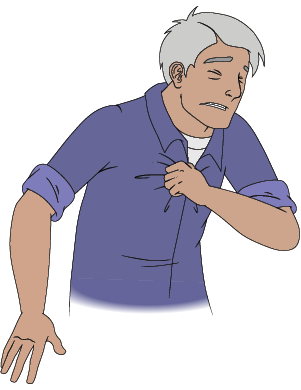
Blood pressure is the pressure of the blood against the inside walls of the blood vessels. Blood pressure goes up and down naturally. When a person is excited or emotionally stressed, blood pressure goes up, but it usually comes down once the excitement has passed. In some people, their blood pressure stays high all the time. This condition of constant high blood pressure is called hypertension.
Over time, hypertension damages the tissues of the cardiovascular system. The walls of the blood vessels become thick and lose their elasticity and the heart becomes enlarged. The changes caused by high blood pressure increase the risk of stroke, heart attack, kidney, and eye problems. Unfortunately, hypertension does not always give warning signals. Someone may feel perfectly well but still have high blood pressure. Therefore, it is often called the “silent killer.”
If you have concerns about your blood pressure, you should speak with your primary healthcare provider. Blood pressure machines in pharmacies can help you monitor your blood pressure but should never be used as a means of self-diagnosis.
Narrowing of the Arteries
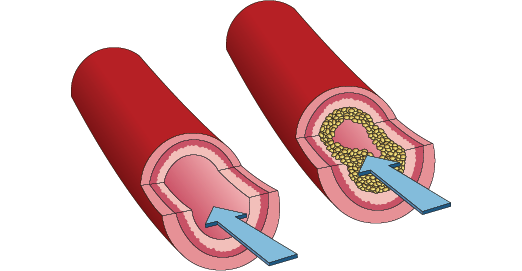
Arteries are the blood vessels that carry blood away from the heart. They become diseased when fatty deposits build up inside them, making the passage for blood narrower.
This process of depositing fat and narrowing of the arteries is called atherosclerosis. In the coronary arteries, which carry oxygenated blood to the heart, it is called coronary artery disease.
As an artery gets narrower, less and less blood can get through. When the artery gets too narrow, the tissues on the other side of the narrowing don’t get enough oxygenated blood to function normally. Although the signs and symptoms of hardening of the arteries usually don’t appear until middle age or later, atherosclerosis often begins in childhood.
 |
 |