Cardiovascular Emergencies
Circulatory System Structures
The circulatory system is a complex closed circuit that circulates blood throughout the body. It consists of the heart and blood vessels. Blood circulation is essential for distributing oxygen and nutrients to cells, and for collecting waste products from cells for excretion from the body.
Heart
The heart is a muscle located in the chest cavity behind the ribs and sternum. This muscle is a hollow organ that allows the blood in the body to circulate by contracting and pumping blood through the blood vessels.
Blood Vessels
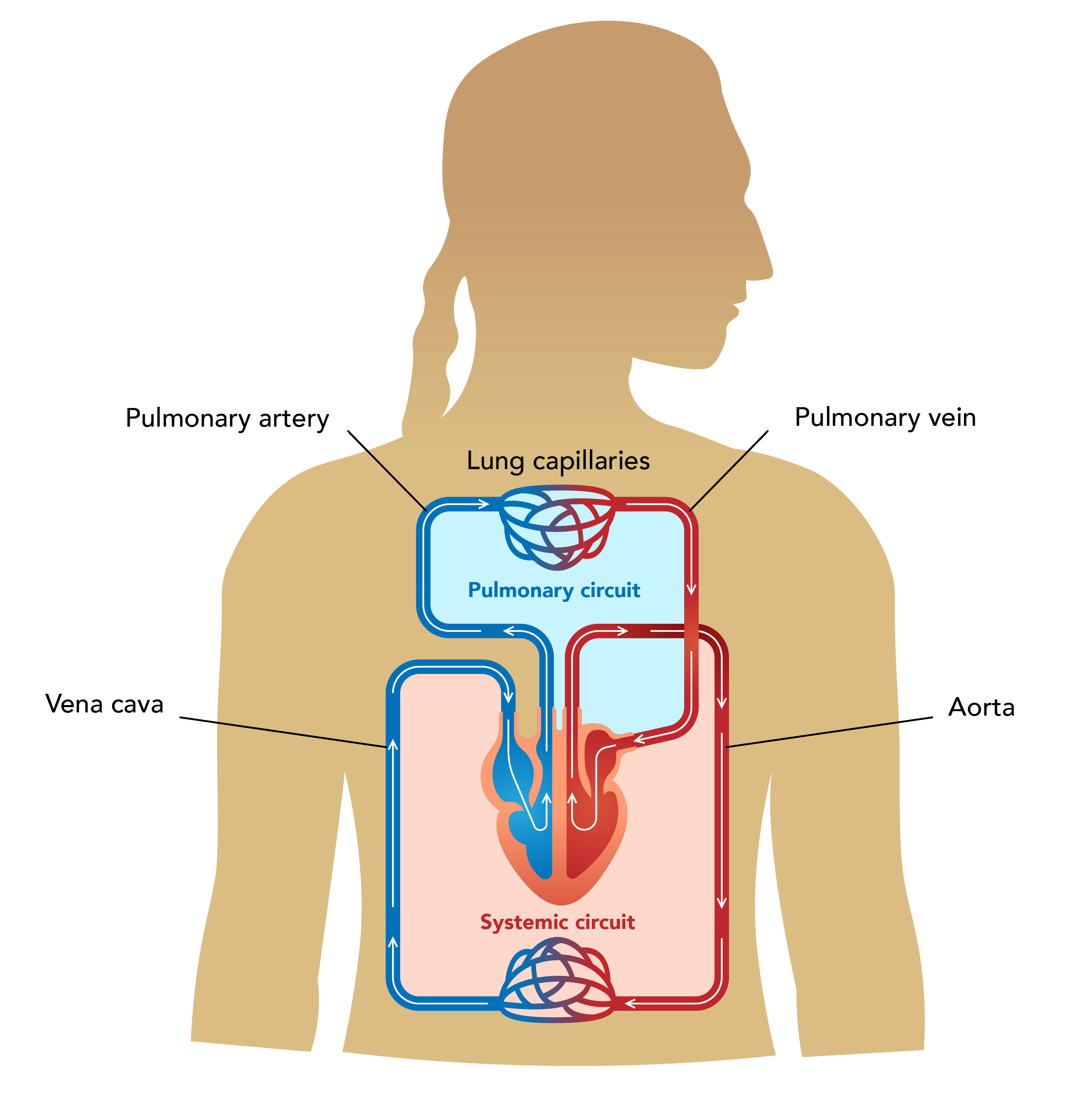
The blood travels through blood vessels. There are three main types of blood vessels: arteries, capillaries, and veins. Generally, arteries carry oxygenated blood away from the heart and veins return deoxygenated blood back to the heart. Capillaries transport blood between cells and the arteries and veins.
Blood Circulation
Blood leaves the right side of the heart (right ventricle) to travel to the lungs, where carbon dioxide is released and oxygen is picked up. The blood then enters the left side of the heart (left atrium) before being pumped out to the rest of the body (left ventricle). Once used by the body, the blood returns to the right side of the heart (right atrium).
 |
 |