Cardiovascular Emergencies
Angina and Heart Attack
Angina occurs when the heart muscle is not properly supplied with oxygenated blood due to narrowed, damaged or blocked arteries in the heart.
A heart attack (or myocardial infarction) occurs when heart muscle tissue dies because its supply of blood has been cut off. A heart attack can feel just like angina, except the pain doesn’t go away with rest and medication.
If the heart attack damages the heart’s electrical system, or if a lot of the heart muscle is affected, the heart may stop beating properly. This is cardiac arrest.
Risk Factors
Several factors increase the risks for cardiovascular disease, heart attack, and stroke. These can be broken down into modifiable and non-modifiable risks.
|
Risk Factors |
|
|
Modifiable |
Non-Modifiable |
|
|
The modifiable risk factors can lead to dyslipidemia (increased deposits of fats), obesity, diabetes, and high blood pressure. These modifiable risks can be reduced through lifestyle changes.
Signs and Symptoms of Angina or Heart Attack
The signs and symptoms of an angina attack and a heart attack are very similar. While the symptoms of an angina attack may go away, it can be an indication that a heart attack is close behind. It is best to suspect a heart attack in every situation.
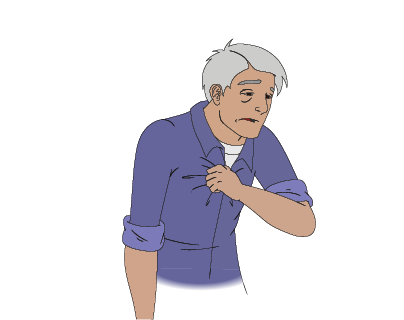
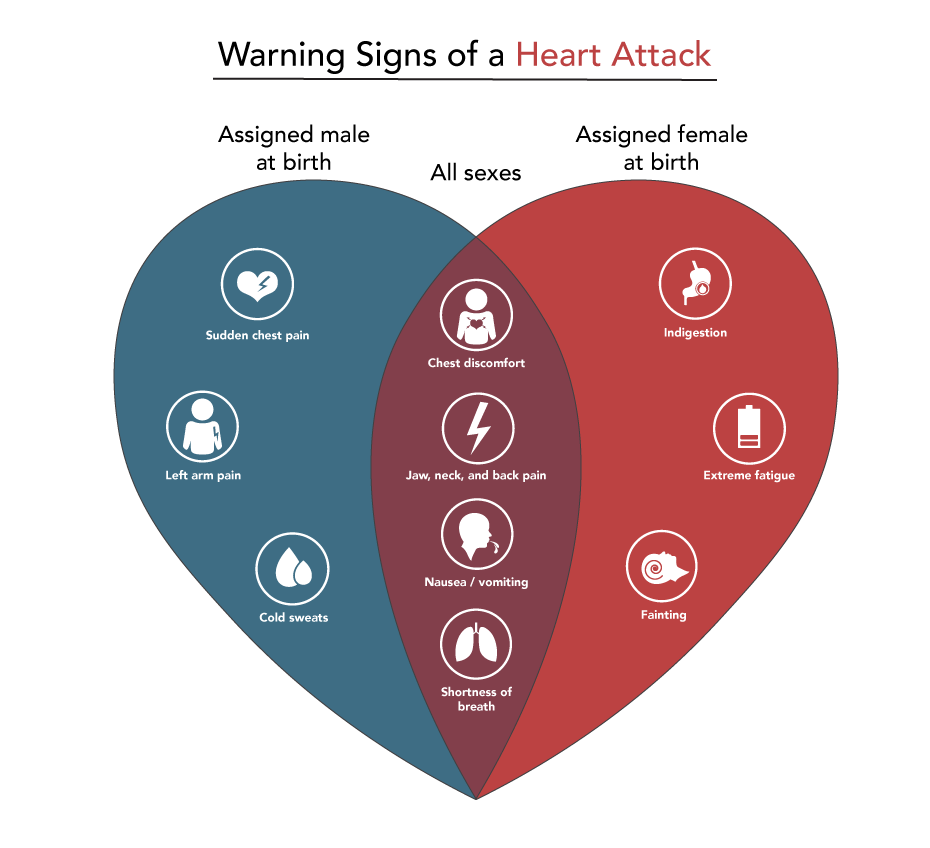
Not everyone will display the same signs and symptoms. Some will have mild signs and symptoms or show only one or two.
Women often have signs and symptoms that do not fit with the classic ones listed.
A heart attack will result in shock, and may display some or all the following:
- Sweaty, cool skin that lacks colour
- Shortness of breath
- Showing obvious pain or discomfort
- Heaviness, tightness, or pressure in chest
- Indigestion, heartburn, nausea, or vomiting
- Aching jaw
- Sore shoulder or arms
Some other signs and symptoms include:
- Fatigue
- Anxiety, which produces denial
- Central back pain
It’s difficult to accept that someone is having a heart attack and could die very soon, especially if the person is a family member or a close friend. The casualty also often denies that anything serious is happening, so it’s easy to accept their reassurances. Denial is an important detail. If someone showing signs of shock, having trouble breathing, and experiencing pain insists there is nothing wrong, then you should be very suspicious and act.
On average, casualties take several hours to get to a hospital from the time they first start feeling unwell. It is this delay that prevents many lives from being saved. Getting the casualty to the hospital quickly gives them the best chance for survival.
Chain of Survival®
When people think of first aid for a heart attack or cardiac arrest, CPR often comes to mind. But CPR is only part of the picture.
The following six steps are essential when helping someone with heart problems:
- Immediate recognition of a cardiovascular emergency and activation of the community emergency medical services (EMS) system. This means calling for help quickly.
- Early CPR with an emphasis on chest compressions.
- Rapid defibrillation.
- Effective advanced life support.
- Integrated post-cardiac arrest care.
- Recovery (treatment, observation, rehabilitation, and psychological support).
Each of the steps is as important as the others. Time is a vital ingredient. To give a casualty in cardiac arrest a reasonable chance of survival, CPR must be started immediately, followed by defibrillation as quickly as possible. For both procedures, the sooner they happen, the better.
You, the first trained person on the scene, are responsible for initiating the sequence. You must recognize the cardiovascular emergency, call for medical help, start CPR if needed, and apply a defibrillator if one is available. You are the crucial first three links in the Chain of Survival®.
First Aid for Angina or Heart Attack
To give first aid for an angina or heart attack, perform the following steps:
- Perform a scene survey.
- Perform a primary survey. Ask the casualty questions:
- “Can you show me where it hurts?”
- “Have you had this pain before?”
- “Do you have medication for this pain?”
- Call for medical help and get a defibrillator.
- Place the casualty at rest and reassure them. The semi-sitting position is usually best, but whatever position is most comfortable for the casualty is okay.
- Assist a responsive casualty to take prescribed medication and/or ASA.
- Follow the Assisting with Medications in the Introduction chapter.
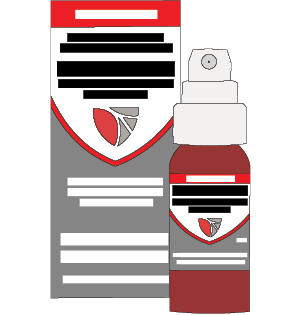
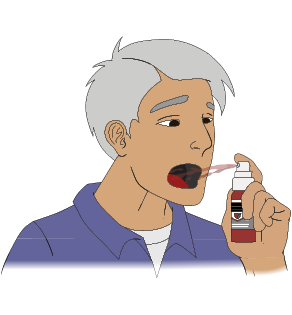
- Assist them to take one dose of nitroglycerin if they have it.
- Assist them to take ASA.
- Repeat doses of nitroglycerin at five-minute intervals if the pain remains and the casualty is still responsive, up to a maximum of 3 doses.
- If the casualty becomes unresponsive and stops breathing, start CPR.
Assisting with ASAIf the casualty has no prescribed medication, or the first dose is ineffective, ask the casualty if they have any allergies to ASA, or if a doctor has ever told them not to take it. If the casualty believes they can take it, suggest they chew one regular ASA tablet (or two low-dose tablets). ASA can reduce the effects of a heart attack because of its anti-clotting properties. |
 |
 |