Minor Wound Care
Managing Burn Emergencies
Burns are injuries to the skin and other tissues caused by heat, radiation, or chemicals. They are a leading cause of injury in the home. Young children and elderly people are especially at risk of being burned, and at these ages, burn injuries can be serious.
Heat burns (also called “thermal” burns)
Burns from heat applied to the body are the most common of burns. A scald is a heat burn caused by hot liquid or steam. Heat burns can also be caused by friction.

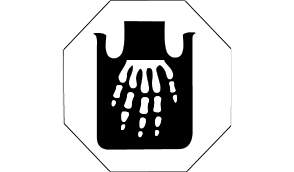
Chemical burns
Chemical burns are often serious because the chemicals continue to burn while they remain on the skin. Examples of chemicals that can burn include acids or alkali metals.
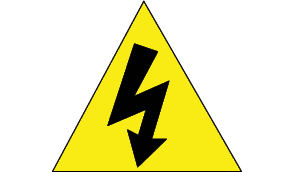
Electrical burns
Electrical burns result from contact with an electric current. Although it is heat that causes these burns, electrical burns are considered separately because of the complications caused by the electricity.
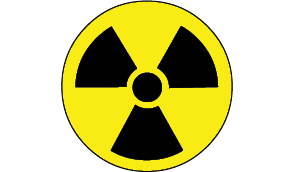
Radiation burns
Most people have experienced a radiation burn in the form of sunburn, where the sun is the source of radiant energy.
Other types of radiant energy that can cause burns include X-rays, arc welder’s flash, and radiation from radioactive material.
Burn Severity and Depth
Burns are classified as critical (full thickness), moderate (partial thickness), or mild (superficial) depending on:
- The depth of the burn
- The amount of body surface that is burned
- The part(s) of the body that is/are burned
- The age and physical condition of the casualty
For a mild or superficial burn, only the top layer of the skin is damaged. Signs include:
- Skin colour is pink to red
- Slight swelling
- Skin is dry
- Tenderness to severe pain in the injured area
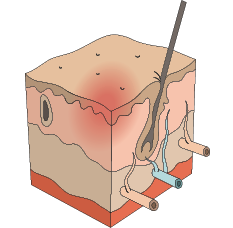
For a moderate or a partial thickness burn, the top two layers of the skin are damaged. Signs include:
- Skin looks raw and is mottled red
- Skin is moist and ranges in colour from white to cherry red
- Blisters containing clear fluid
- Extreme pain
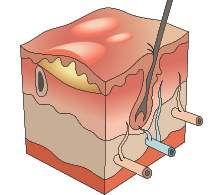
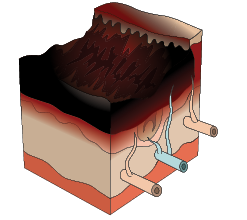
For a critical or full thickness burn, the full thickness of the skin, including tissues under the skin, is damaged. Signs include:
- Skin is pearly white, tan-coloured or charred black
- Skin is dry and leathery
- You may see blood vessels and bones under the skin
- Little or no pain (nerves are destroyed)
A first aider can quickly estimate how much body surface area has been burned using the rule of nines. The body is divided into areas of either nine or eighteen percent of total body area. Add these areas to quickly calculate the percentage of the body that is affected. The percentages change slightly for a child’s body.
The rule of nines for an adult is as follows:
- 9% – Head and neck together
- 9% – Each arm
- 18% – Front surfaces of the trunk
- 18% – Rear surfaces of the trunk
- 1% – Genitalia
- 18% – Each leg

The rule of nines for a child is as follows:
- 18% – Head and neck together
- 9% – Each arm
- 18% – Front surfaces of the trunk
- 18% – Rear surfaces of the trunk
- 14% – Each leg

Another way to estimate burned area is using the casualty’s palm. The area of the casualty’s palm equals one percent of the casualty’s body surface area. With this information, you can estimate the percentage of the body that is burned.
Critical Burns
The burns that are critical, that may be life-threatening, or can cause lifelong disability or disfigurement include:
- Any burn that interferes with breathing, inhalation injuries.
- Any burn where there is also a serious soft tissue injury or fracture.
- Any burn where the skin bends, including the hands, elbows, knees, etc.
- All electrical burns, because of internal injuries or cardiac compromise.
- Most chemical burns.
- Burns to casualties under two or over fifty years of age, as they do not tolerate burns well.
- Burns to casualties who have serious underlying medical conditions including diabetes, seizure disorders, hypertension, respiratory difficulties, or mental illness.
Complications of Burns
Common complications of burns include:
- Shock caused by the loss of blood or blood plasma to the surrounding tissues.
- Infection, because burned skin is not a good barrier to bacteria.
- Breathing problems if the face or throat is burned, or the casualty has inhaled smoke, fumes, or steam.
- Swelling, as clothing and jewelry will cut off circulation when the area swells.
First Aid for General Thermal (Heat) Burns
To give first aid for a thermal (heat) burn, perform the following steps:
- Perform a scene survey and a primary survey.
- Cool the burn right away by immersing it in cool water if possible.
- If you are unable to immerse the burn in cool water, pour cool water on the area, or cover it with a clean, wet cloth.
- Cool the burn until the pain has lessened. This will reduce the temperature of the burned area, and reduce tissue damage, swelling, blistering, and relieve the pain.
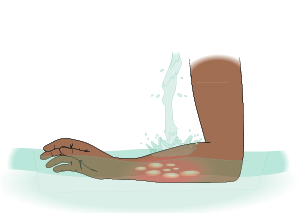
- Remove jewelry and tight clothing before the injury swells. Don’t remove anything that is stuck.
- When the pain has lessened, loosely cover the burn with a clean, lint-free dressing. If the area is large, use a sheet.
- Give ongoing casualty care.
First Aid for Chemical Burns
A corrosive chemical will keep burning as long as it is on the skin. The faster you get the chemical off the skin, the less tissue damage there will be.
To give first aid for chemical burns, perform the following steps:
- Perform a scene survey and a primary survey.
- Flush the area with large amounts of cool water. Remove contaminated clothing while flushing. If the chemical is a dry powder, quickly brush off any loose chemical with a cloth before flushing.
- Continue flushing the area with water for 15 to 20 minutes.
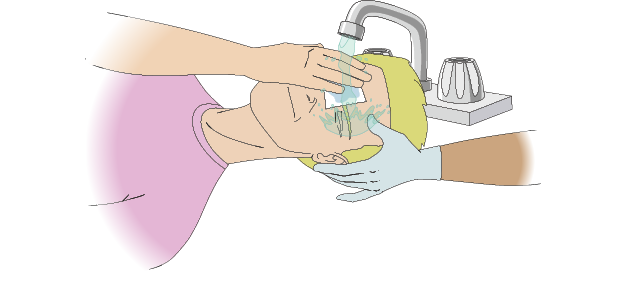
- When the pain has lessened, loosely cover the burn with a clean, lint-free dressing.
- Give ongoing casualty care.
- Transport the casualty to medical care for further assessment.
If you work with chemicals, make sure you know the specific first aid for the chemicals in your workplace. The safety data sheet (SDS) for each chemical contains this information.
Have a copy of the SDS to send to the hospital with the injured worker if possible. If you work with chemicals at your place of employment, you must be certified in WHMIS/GHS.
A corrosive chemical will keep burning as long as it is on the skin. The faster you get the chemical off the skin, the less tissue damage there will be. In some workplaces that regularly work with dangerous materials, there should be shower access so it’s important to know these locations.
First Aid for Electrical Burns
Electrical burns can be either flash burns or contact burns.
A flash burn results when high-voltage electricity arcs (jumps) from the electric source to the casualty. When the electricity arcs, it produces intense heat for a very short time and this heat causes burns, which can be very deep. The force can throw the casualty as well. Head/spinal injuries, fractures or dislocations may be present.
In a contact burn, electricity travels through the body. The body may be burned at both the point where the electricity entered the body and where it exited. There may also be severe tissue damage inside the body, along the path the electricity followed.
An electrical current going through the body can cause breathing to stop and/or the heart to stop. There is also the danger of electrical injury to the first aider.
To give first aid for an electrical burn, perform the following steps:
- Perform a scene survey, then a primary survey. Make sure there is no further danger from electricity; call the power company or other officials to make the scene safe. If high voltages are involved, all you can do is keep others out of the area until the power is shut off.
- Does it look like the casualty was thrown? If so, suspect a head or spinal injury.
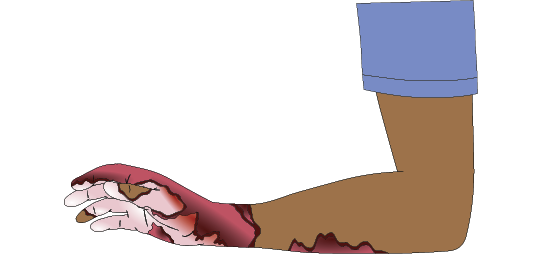
- Perform a secondary survey to locate burns and any fractures, dislocations, etc. Look for both entry and exit burns.
- Give first aid for the burns by covering them with clean, dry dressings.
- Give first aid for any fractures or dislocations.
- Give ongoing casualty care.
Consideration for when power lines are down
In a case where power lines are down, adhere to the following:
- If there is a possibility of a downed power line or a weakened pole, do not leave your vehicle until you have inspected the surrounding area for downed power lines.
- Stay inside your vehicle if it is touching power lines. Wait for authorities to arrive, then follow their instructions.
- If you suspect or see any downed power lines, do not allow anyone to enter the area. When you secure the area from anyone entering, notify the power company. Downed power lines pose a significant invisible hazard for which you must be aware.
- With high voltages, electricity can travel through the ground, energizing the area around the power lines. If the soles of your feet tingle as you enter an area, you have gone too far. Get back! A technique is to shuffle your feet as you move away from the source(1).
- Assume all downed power lines are live. A high voltage wire may be unpredictable. It may jump to an object for a better ground. Stay well away from any wires.
- Remember that vehicles, guardrails, metal fences, etc., conduct electricity.
First Aid for Radiation Burns
Radiation burns can come from a radioactive source, such as in a lab or nuclear power plant; from X-rays or other radiation-based medical equipment; or, most commonly, from the sun. A sunburn is the most likely radiation burn a casualty will experience.
Sunburns can range in severity from those that are mildly uncomfortable to those that are serious because they cover a large area of the body and can be complicated by heatstroke.
To give first aid for a minor sunburn, perform the following steps:
- Get the casualty out of the sun.
- Perform a scene survey and primary survey.
- Gently sponge the burned area with cool water or cover with a wet towel to relieve the pain. Repeat this step as needed to relieve pain.
- Pat the skin dry and apply a medicated sunburn ointment if available. Apply the lotion according to directions on the package.
- Protect burned areas from further exposure to the sun.
- Don’t break any blisters, as doing so may promote infection. If large areas of the skin begin to blister, get medical help.
- If the casualty begins to vomit, or develops a fever, give first aid for heat injuries and get medical help.
First aid for burns from X-rays and nuclear radiation There is no specific first aid for radiation burns from X-rays or radioactive material. Give first aid following the guidelines for first aid for heat burns. In an environment where there is radioactive material, protect yourself accordingly.
 |
 |
1 Voltage decreases as distance from the wire touching the ground increases. If you run or take large steps, you could conduct electricity from one leg at one voltage to another leg at another voltage, which increases the potential for severe injury or even death.