First Aid Tools
Dressings
A dressing is a protective covering put on a wound to help control bleeding, absorb blood from the wound, and prevent further contamination. A dressing should be:
- Sterile, or as clean as possible
- Large enough to cover the wound
- Highly absorbent
- Compressible, thick, and soft
- Non-stick and lint-free to reduce the possibility of sticking to the wound
Dressings are available in a variety of sizes and designs. The dressings used most often in first aid are the following:
- Adhesive dressings – Prepared sterile gauze dressings with their own adhesive strips.
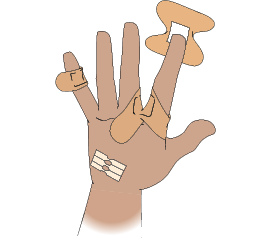
- Wound closures – Adhesive strips that bring the edges of the wound together to assist healing.
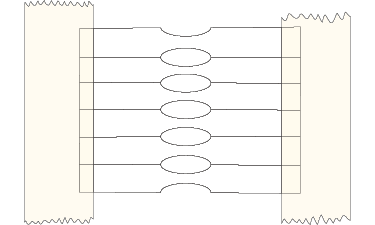
- Gauze dressings – Packaged gauze available as sterile single packs or in bulk packaging
- Pressure dressings – Large sterile dressings of gauze and other absorbent material, usually with an attached roller bandage. They are used to apply pressure to a wound with severe bleeding
- Hemostatic dressings – Pressure dressings impregnated with clot promoting agents, used to stop serious bleeding. These dressings are not designed for all wound types. Check with your local protocols for more information.
Follow these guidelines for applying dressings:
- Prevent further contamination.
- Extend the dressing beyond the edges of the wound.
- If blood soaks through a dressing, leave it in place and cover with more dressings.
- Secure a dressing with tape or bandages.
Improvised Dressings
When commercially-prepared dressings are not available, they can be improvised from materials readily available. An improvised dressing should be:
- Clean, preferably sterile
- Non-adherent
- Lint-free
- Absorbent
Some examples of improvised dressings are cotton clothing, towels, paper towels, sanitary pads, and diapers.
 |
 |