CPR and AED
Child CPR
One-rescuer CPR for a child is the same as for an adult, except for adjusting to accommodate the smaller size. Use one hand for CPR unless you are not able to compress the chest sufficiently. The amount of air required to make the chest rise will be less than for an adult.
Two-rescuer CPR for a child changes the compression to ventilation ratio. When a child goes into cardiac arrest, typically it is due to a breathing issue, whereas for an adult it is typically a heart issue. In addition, a child requires more oxygen on average than an adult does, and in an ideal situation, CPR for a child would have breaths delivered every 15 compressions. However, the time it takes to stop compressions, move to the head, deliver the breaths, and return to the chest is too long. When there are two rescuers, that time can be cut down significantly, by stopping at 15 compressions to give 2 breaths. This helps to deliver more oxygenated blood to the vital organs and provides the child with a better chance of survival.
Performing One-Rescuer Child CPR
To carry out one-rescuer child CPR, perform the following steps:
- Perform a scene survey.
- Assess responsiveness.
- Send someone to call 9-1-1 and get an AED if available.
- Perform a primary survey.
-
Open the airway.
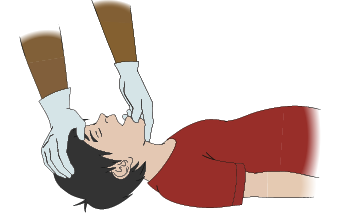
- Check for breathing for at least 5 and no more than 10 seconds.
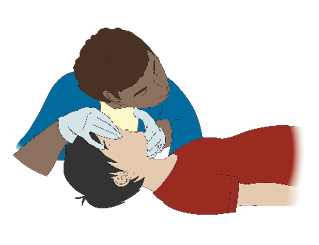
- If the casualty is not breathing, or not breathing effectively (agonal breaths), begin compressions immediately.
-
- Give 30 compressions. Push hard. Push fast.
- Position one hand in the centre of the upper chest with your shoulder directly over your hand, and keep the elbow locked.
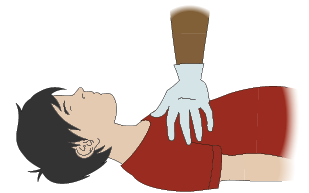
- Place your other hand behind your back, or on the ground above the child’s head.
- Press the heel of the hand straight down on the breastbone. The depth of each compression should be 1/3 the depth of the chest.
- Release pressure and completely remove your weight at the top of each compression to allow the chest to return to the resting position.
- Give compressions at a rate of 100 to 120 per minute. Count compressions out loud to keep track of how many you have given, and to help keep a steady rhythm.
- Position one hand in the centre of the upper chest with your shoulder directly over your hand, and keep the elbow locked.
- Open their airway using a head-tilt/chin-lift.
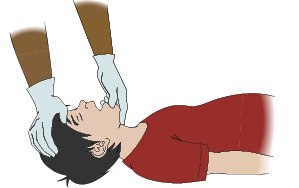
- Position a barrier device and give 2 ventilations.
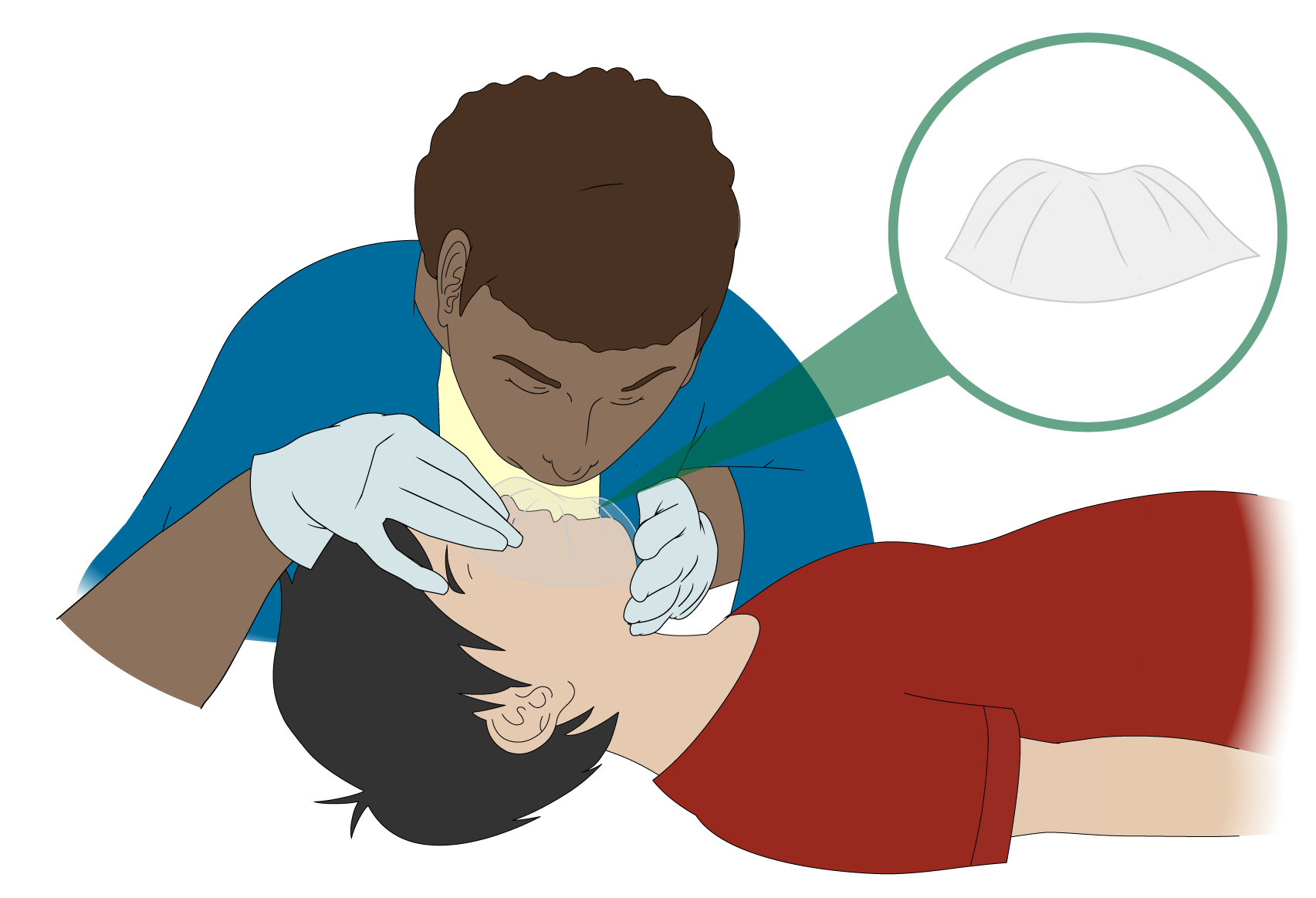
- For a child casualty, each breath should take less than 1 second, with just enough air to make the chest rise.
This is one cycle of 30:2 (30 compressions to 2 ventilations).
- For a child casualty, each breath should take less than 1 second, with just enough air to make the chest rise.
6. Continue CPR until:
- An AED is applied.
- The casualty begins to respond.
- Another first aider or medical help takes over.
- You are too exhausted to continue.
An AED should be applied as soon as it arrives at the scene.
Performing Two-Rescuer Child CPR
To perform two-rescuer CPR on a child, the first aider who performs the primary survey stays at the casualty’s head, keeping the airway open and ventilating after 15 compressions. The second rescuer will compress the chest.
One cycle of two-rescuer CPR for a child is 15 compressions and 2 breaths.
To maintain effective compressions, it is recommended that rescuers switch roles after every 10 cycles of compressions and ventilations (approximately 2 minutes).
 |
 |