Environmental Injuries and Illnesses
Heat-Related Injuries and Illnesses
Prolonged exposure to extreme heat or heavy exertion in a hot environment can cause heat illnesses (hyperthermia).
Factors that can contribute to heat-related illnesses include the age of the casualty, their level of fitness, health condition, medications or other drugs, and occupation.
Heat Cramps
Heat cramps are painful muscle cramps, usually in the legs and abdomen, caused by losing too much water and electrolytes through sweating. Heat cramps are usually caused by heavy exercise or physical work in a hot environment. The casualty will complain of cramps and show signs of excessive sweating, though in a dry environment the casualty may not seem to be sweating because the sweat evaporates so quickly.
First aid for heat cramps
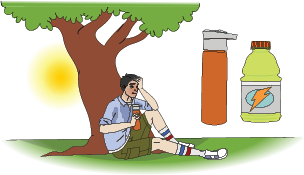
To give first aid for heat cramps, perform the following steps:
- Place the casualty at rest in a cool place.
- Give the conscious casualty water or drinks with electrolytes and carbohydrates, as much as they want.
- Gentle massage can provide relief for cramps.
- If the cramps do not go away, get medical help.
Heat Exhaustion
Heat exhaustion is more serious than heat cramps. The casualty has lost a lot of fluids through sweating. Circulation is affected as the blood flows away from the major organs and pools in the blood vessels just below the skin.
Signs and symptoms of heat exhaustion
The following are signs and symptoms of heat exhaustion:
- Excessive sweating and dilated pupils
- Casualty may complain of dizziness, blurred vision, headaches, or cramps
- Signs of shock, including cold, clammy skin; weak, rapid pulse; rapid, shallow breathing; vomiting; and unconsciousness
- Dry mouth and thirst (signs of dehydration)
- Irritability or aggressive behaviour
First aid for heat exhaustion
First aid for heat exhaustion combines first aid for heat cramps with first aid for shock.
If the casualty is conscious, perform the following steps:
- Give the conscious casualty water or drinks with electrolytes and carbohydrates; if the casualty vomits, don’t give anything by mouth and get medical help right away.
- Place them at rest on their back in a cool place.
- Remove excessive clothing and loosen tight clothing at the neck and waist.
- Apply cool wet towels or cold packs to the body core, around the head, and under the arms.
If the casualty is unconscious, perform the following steps:
- Place them in the recovery position.
- Get medical help right away.
- Give ongoing casualty care until medical help takes over.
Heat stroke
Heat stroke is a life-threatening condition that occurs when the body’s temperature rises above normal ranges. This condition usually happens due to prolonged exposure to high temperatures, especially if the exposure is in a poorly ventilated area. Heat stroke occurs when the body is unable to cool itself down due to the high temperatures. At this point the casualty will stop sweating, which allows the body’s core temperature to keep rising.
Exertional heat stroke is another life-threatening condition which occurs when the body’s core temperature rises above normal ranges due to heavy physical activity in humid and warm climates. Often casualties with this type of heat stroke will continue to sweat. Heat stroke can cause permanent brain damage or even death if proper first aid steps are not taken. The elderly, small children and casualties in poor health are at a higher risk of suffering from heat stroke.
Signs and symptoms of heat stroke
The following are signs and symptoms of heat stroke:
- Body temperature rapidly rises to 40°C or higher and the casualty is hot to the touch
- The pulse is rapid and full but gets weaker in later stages
- Breathing is noisy
- Skin is flushed, hot and dry in classic heat stroke, and flushed, hot and sweaty in exertional heat stroke
- Casualty is restless and may complain of headaches, fatigue, dizziness, and nausea
- Vomiting, convulsions, unconsciousness may occur
You can tell the difference between heat exhaustion and heat stroke by the condition of the skin. In heat exhaustion, the skin is moist and cold. In heat stroke, the skin is hot, flushed, and may be dry or wet.
First aid for heat stroke
Perform a scene survey and a primary survey. Lowering body temperature is the most urgent first aid for heat stroke.
To give first aid for heat stroke, perform the following steps:
- Move the casualty to a cool, shaded place.
- Call 9-1-1.
- Cool the casualty. Remove the casualty’s outer clothing and immerse the casualty in cool water (if possible) up to their chin. Watch them closely.
- If cooling the casualty with water is not possible, cover them with wet sheets and fan the sheets to increase cooling. Sponge the casualty with cool water.
- Place cold packs in the armpits, neck, and groin areas.
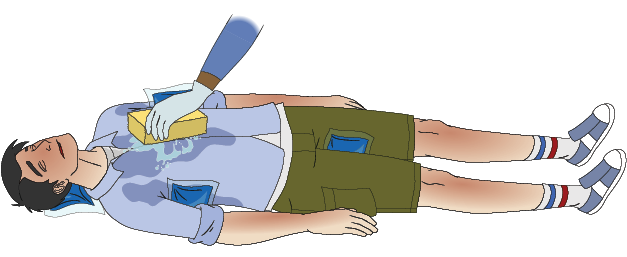
- When their body feels cool to touch, cover them with a dry sheet. Put the conscious casualty into the shock position and the unconscious casualty into the recovery position. If their temperature begins to rise again, repeat the cooling process.
- Give ongoing casualty care until handover to medical help.
Lightning Injuries
Electrical storms occur throughout most of Canada. Although the chance of being struck by lightning is very low, there are many injuries and deaths each year from lightning strikes.
Lightning often does strike the same place twice. Assess the risk of another strike, and move to a safer location if needed.
Give first aid at the scene of a lightning strike as you would any other emergency scene, keeping the following in mind:
- A person struck by lightning does not hold an electrical charge, you can touch the casualty without fear of electric shock.
- The casualty may have been thrown, therefore, you should suspect a head or spinal injury.
- If more than one person is injured, the principles of multiple casualty management are reversed: give first aid to unresponsive, non-breathing casualties first since the casualties who are still breathing can recover.
- Advise all casualties of a lightning strike to seek medical help to ensure a full evaluation of any injuries.
 |
 |