Head and Spinal Injuries
Spinal Injuries
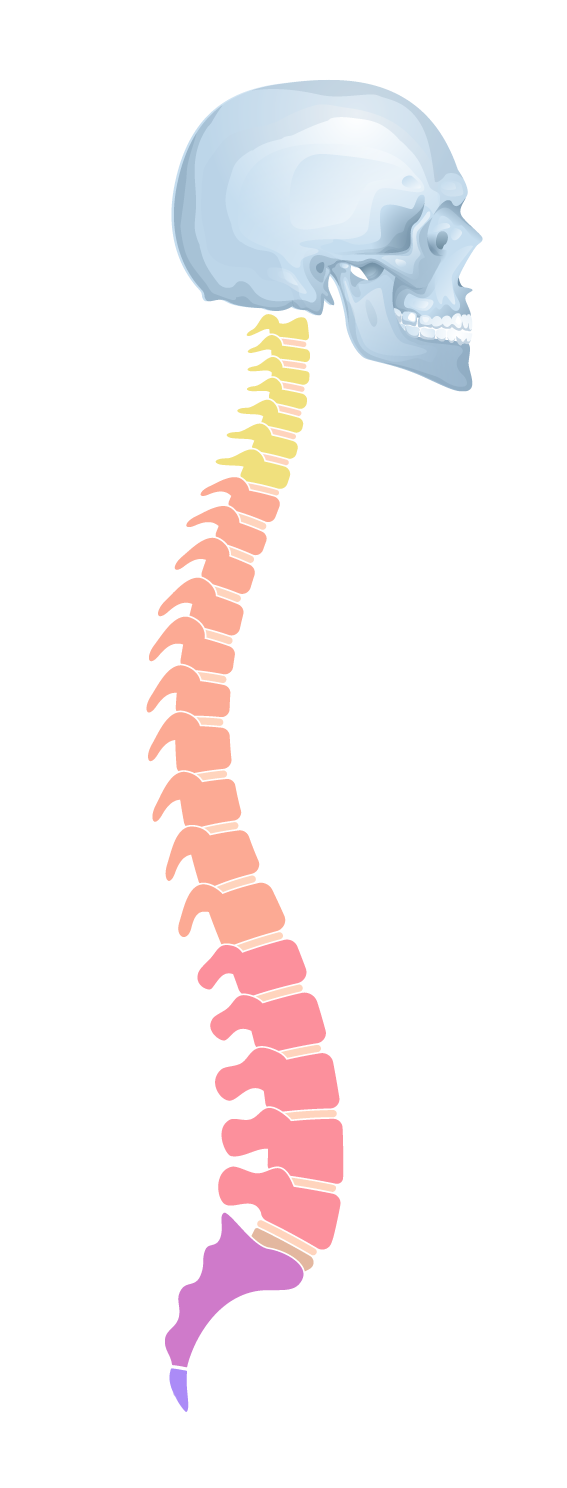
Injury to the spine threatens the spinal cord that runs through it and the nerves that branch out from the cord.
Damage to the spinal cord or nerves can result in complete and permanent loss of feeling and paralysis below the point of injury. In every emergency situation, assess the possibility of a spinal injury. If any possibility exists, give first aid for a spinal injury and get medical help as soon as possible.
Use the history of the scene, especially the mechanism of injury, to decide if there is a chance of a spinal injury. If the history of the scene suggests a spinal injury, give first aid for a spinal injury, even if the signs and symptoms listed below are not present.
- Swelling and/or bruising at the site of the injury
- Numbness, tingling or a loss of feeling in the arms and legs on one or both sides of the body
- Unable to move arms and/or legs on one or both sides of the body
- Pain at the injury site
- Signs of shock
First Aid for a Spinal Injury
The aim of first aid for spinal injuries is to prevent further injury by preventing movement of the injured area. When moving the casualty is necessary, support them in a way that minimizes movement of the head and spine.
To give first aid for a spinal injury, perform the following steps:
- As soon as you suspect a head or spinal injury, tell the casualty not to move. Steady and support the casualty’s head and neck as soon as you can.
- Show a bystander how they can help support you by:
- Keeping their elbows on the ground to keep their arms steady.
- Firmly holding the casualty’s head with their fingers along the line of the jaw.
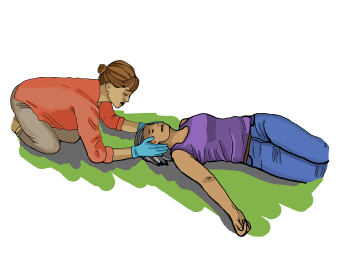
- Not covering the casualty’s ears, as this prevents them from hearing you.
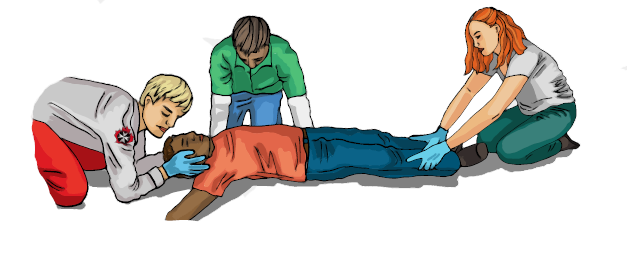
- Show a second bystander how to steady and support the feet. The head and feet should be continuously supported until either the casualty is fully immobilized or medical help takes over.
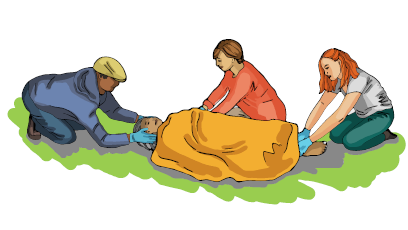
- Perform a primary survey. If the casualty is unresponsive, check for breathing before opening the airway.
- Perform a secondary survey as needed.
- If medical help is going to arrive at the scene, steady and support the casualty in the position found and give ongoing casualty care. Continue to steady and support the head and feet until help arrives.
Turning a casualty face up when a head or spinal injury is suspected
To the extent possible, you should give first aid in the position in which the casualty is found. But sometimes you have to turn a casualty over to assess for life-threatening injuries or give lifesaving first aid.
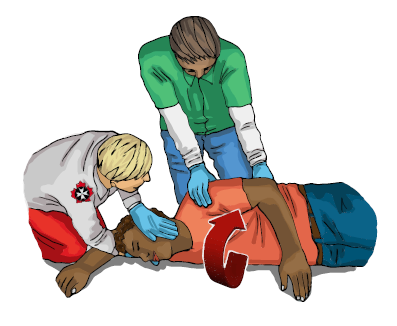
When you suspect a head or spinal injury, turn the casualty as a unit so the head and spine stay in the same relative position.
To turn a casualty face up, perform the following steps:
- The first aider at the head supports the casualty’s head by placing their right hand along the right side of the casualty’s head and their left hand along the casualty’s left side.
- The other first aider extends the arm of the casualty that is closest to them over the casualty’s head and gets a good grip on the casualty at the shoulder and waist.
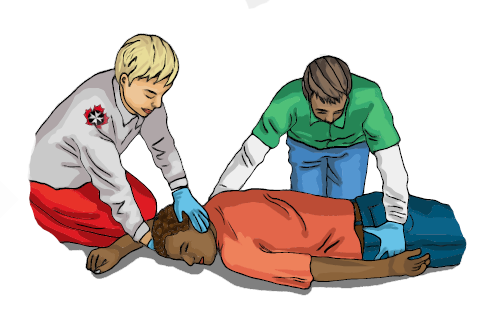
- The two first aiders work together to roll the casualty. The first aider at the casualty’s head keeps the head in line with its original position while the second first aider rolls the casualty so that there is no twisting of the body.
- If extra help is available, have the third first aider support the legs to prevent twisting of the neck and spine. If a fourth first aider is present, position one first aider at the shoulders and another at the casualty’s waist.
 |
 |