Head and Spinal Injuries
Head Injuries
The following signs and symptoms indicate a possible fracture of the skull or facial bones, concussion, or compression:
- Deformed skull
- Swollen, bruised, or bleeding scalp
- Straw-coloured fluid or blood coming from the nose or ear(s)
- Bruising around the eyes (black eye) or behind the ears
- Nausea, vomiting, especially in children
- Confused, dazed, possibly combative
- Semi-conscious or unconscious
- Breathing has stopped or respiration is irregular
- Very slow pulse rate
- Pupils are of unequal size
- Pain at the injury site
- Weakened or paralyzed arms and/or legs
- Pain when swallowing or moving the jaw
- Wounds in the mouth
- Knocked-out teeth
- Shock
- Convulsions
An unconscious casualty with a head injury may vomit. Be ready to turn the casualty to their side (as a unit if possible) and clear the airway quickly.
HelmetsHelmets are designed to protect the wearer from fractures. They are not actually designed to protect against concussion or compression injury, but they do reduce the intensity of both conditions. If you see damage to the helmet, you should suspect a concussion or compression injury. |
Skull Fractures
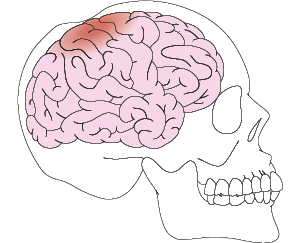
Fractures of the skull may be the result of direct force or an indirect force that is transmitted through the bones. Fractures may occur in the cranium, at the base of the skull, or in the face. Facial fractures include the nose, the bones around the eyes, the upper jaw, and the lower jaw. Fractures of the jaw are often complicated by wounds inside the mouth.
First aid for a head injury
First aid for fractures of the skull depends on the fracture site and the signs. Whenever there is a skull fracture, a spinal injury should be suspected. Give first aid as if there was a neck injury. The head and neck should be immobilized accordingly.
To give first aid for a head injury, perform the following steps:
- Perform a scene survey. Assess the mechanism of injury. If you suspect that there may be a head injury, tell the casualty not to move and get medical help. Steady and support the head with your hands as soon as possible. Perform a primary survey.
- If blood or fluid is coming from the ear canal, secure a sterile dressing lightly over the ear, making sure fluids can drain.
- Protect areas of depression, lumps, bumps, or scalp wounds where an underlying skull fracture is suspected. Avoid pressure on the fracture site.
- Warn the casualty not to blow their nose if there is blood or fluid coming from it. Do not restrict blood flow. Wipe away any trickling blood to prevent it from entering the mouth, as this could cause breathing difficulties.
- Give ongoing casualty care until medical help takes over.
First aid for fractures of the facial bones and jaw
To give first aid for fractures of the facial bones and jaw, perform the following steps:
- Perform a scene survey. If you suspect a head injury, tell the casualty not to move and get medical help. Steady and support the head with your hands as soon as possible. Perform a primary survey. Check the airway and make sure there is nothing in the mouth.
- Remove any knocked-out teeth or loose dentures and maintain drainage for blood and saliva.
- If there is a suspected head or spinal injury, steady and support the casualty in the position found until medical help takes over.
- If there is no suspected head or spinal injury:
- Place the conscious casualty in a sitting position with their head well forward to allow any fluids to drain freely
- If the casualty cannot sit comfortably, place them in the recovery position.
- Place the unconscious breathing casualty in the recovery position.
- Get medical help and give ongoing casualty care.
If transporting the casualty on a stretcher, ensure good drainage from the mouth and nose so that breathing will not be impaired.
Compression Injuries
A compression injury occurs when there is a build-up of fluid or blood between the skull and the brain. This build-up puts pressure on the brain, since there is nowhere for the fluid to go. Signs and symptoms will worsen over time as more pressure builds up. It is very important to monitor a casualty after a blow to the head for signs and symptoms of a compression injury, even if the initial injury is minor.
- Loss of consciousness
- Decreasing level of consciousness
- Nausea and vomiting
- Unequal size of pupils
- One or both pupils do not respond to light
 |
 |