CPR and AED
AED
Defibrillation is the application of an electric shock to a heart that has stopped pumping effectively. An automated external defibrillator (AED) has been proven to be one of the most important tools in saving the lives of sudden cardiac arrest casualties. It is the third link in the Chain of Survival® and is the responsibility of the first aider.
An AED is an electronic device that is programmed to recognize and shock two types of heart rhythms, Ventricular Fibrillation (VF) and pulseless Ventricular Tachycardia (VT). If the machine recognizes either VT or VF in a casualty, it will charge and will indicate that a shock is advised.
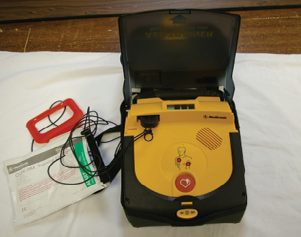
The purpose of this shock is to correct the abnormal electrical disturbance and re-establish the heart rhythm.
It is important to remember that AEDs will only shock when VT or VF is present. You cannot shock a heart that is in normal rhythm, nor will the machine shock when it is not appropriate, such as when the heart is stopping (asystole) or there is pulseless electrical activity (PEA).
Time is a critical factor in determining survival from cardiac arrest; the heart will only stay in fibrillation for a short time before all electrical activity ceases. Defibrillation must be performed early to be most effective. CPR can keep oxygenated blood flowing to the brain and helps extend the length of time that the heart will remain in VT or VF, the only arrhythmias that AEDs will shock. CPR then can provide more time until the AED is attached and ready to deliver a shock.
Using an AED for an Adult
To use an AED for an adult, perform the following steps:
- Power on the AED.
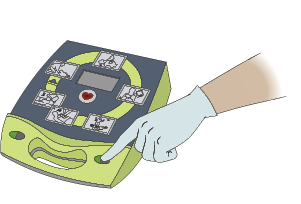
- Follow the voice prompts.
The audio instructions will direct you to:
- Bare the chest and attach electrode pads. The pads need to stick directly to the skin, so excessive sweat, water, and chest hair need to be removed before application.
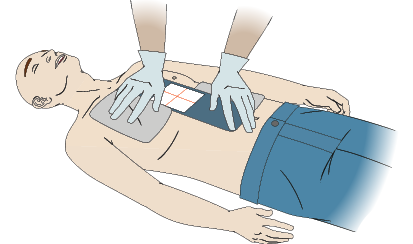
- Stand back (or clear).
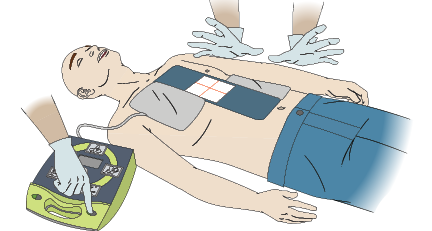
- Press the shock button and/or continue CPR as prompted by the machine.
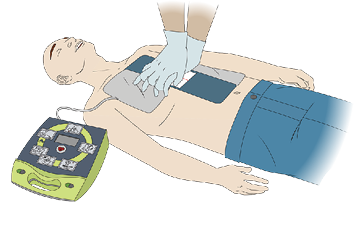
Continue with CPR and listen for the AED to give additional instructions.
Using an AED for a Child or Infant
An AED can be used on a child or an infant. An AED with child pads should be used according to the directions on the pads.
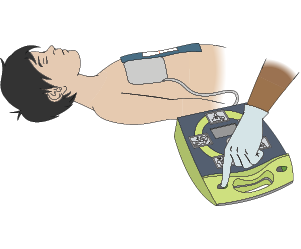
Most AEDs are stocked with pads designed for adult casualties. If an AED does not have specific pads for a child, adult pads can be used by placing them on the front and back of the child or infant.
Defibrillation – Special Considerations and Circumstances
The following are special considerations and circumstances regarding defibrillation:
Pregnant women – AEDs can be safely used in all stages of pregnancy.
Pacemakers or implanted defibrillators – Defibrillator pads should not be placed directly over a pacemaker site but should be approximately 2.5 cm (one inch) away. Look for scars or lumps on the chest as an indicator of implanted devices.
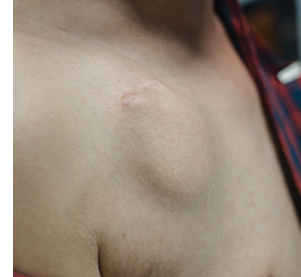
Patch medications – Some casualties wear a patch that contains medication such as nitroglycerin for angina. If the patch is in the way of the pad placement, gently remove it from the chest with gloved hands and wipe the area clean.
Wet environment – AEDs can be used in wet areas. Dry the chest to ensure good pad contact. Move the casualty to a dry area if possible. If you or the casualty is submerged in water, avoid using the AED. Generally, if the water does not splash when you tap your foot, it is safe.
Metal surfaces – AEDs can be used safely with the casualty on a metal surface. A blanket can be placed between the casualty and the metal surface if you are concerned.
Jewelry and piercings – Avoid placing pads over top of piercings, jewelry, or anything that would cause a gap. AED pads should adhere flat to the skin.
Environment – Ensure the environment you are using an AED in does not contain explosive gases.
Post-Resuscitation Care and Handover to EMS
If defibrillation is successful, the casualty may start breathing on their own but remain unresponsive. In this case, place the casualty into the recovery position and monitor the ABCs. Leave the AED attached. The AED will continually monitor the heart rhythm, or you may need to use the device again.
Certain information is important for emergency services personnel, such as the time of collapse, time when CPR was started, time when first shock was delivered, and number of shocks. Provide as much detail as possible and follow the directions of medical personnel once they arrive on the scene.
AED Workplace Policies and Procedures
Regulations concerning the requirement of a workplace to have an AED, and the necessary policies about AEDs, will be contained within federal, provincial, or territorial legislation. Where not specifically outlined by regulations, a workplace should have an established AED policy which outlines:
- Certification and recertification requirements
- Maintenance and inspection processes
- Post-use process (downloading information, resupplying pads and rescue pouch, etc.)
- Replacement of batteries and pads
- Replacement of unit at its end-of-life
Ensure that you are aware of where the AED is kept in your workplace so it can be quickly retrieved in the case of a cardiovascular emergency. If you are the designated attendant in a workplace, you are responsible for ensuring the AED is ready to be used in the event of an emergency. You will send or go for an AED when treating a casualty who is unconscious, having difficulty breathing, or complaining of chest pain.
The indications to use an AED in the workplace are the same as other cardiovascular emergency incidents, and special cases should always be considered (e.g., if a casualty has a pacemaker).
 If you need to use an AED to treat a casualty experiencing a cardiovascular emergency, ensure you follow your workplace/provincial procedures for reporting and documenting incidents.
AED troubleshooting and maintenance
Regular maintenance of AED units, including regular inspections, are important to ensuring the AED is available when it is needed. As part of the inspection process, assess and document the following:
- Date of inspection to track frequency of assessments and when equipment parts are replaced.
- Expiration dates of the AED equipment such as the battery and defibrillation pads.
- Physical appearance of the defibrillation pads (adult and pediatric). If they appear worn or damaged, they must be replaced.
- Overall function of the AED such as its power, that the resuce pack is present and stocked, and the indicator lights display a green status.
If you are performing an AED inspection in your workplace, ensure you follow the manufacturing guidelines and procedures outlined in your workplace’s AED inspection program.
Most AEDs perform a daily system check and display in some manner that they are ready for use. Sometimes the device will display the message “Check Electrodes.” If this occurs, check the cable to the pads connection, the cable to machine connection, and the adherence of the pads to the casualty’s chest. Machines will also advise if motion is detected or if the battery is low.
AEDs are sold with an instruction manual that will outline troubleshooting in detail. Always follow the manufacturer’s suggested guidelines and checklists for inspections and maintenance.
 |
 |