Appendix - The Body and How it Works
The Skin
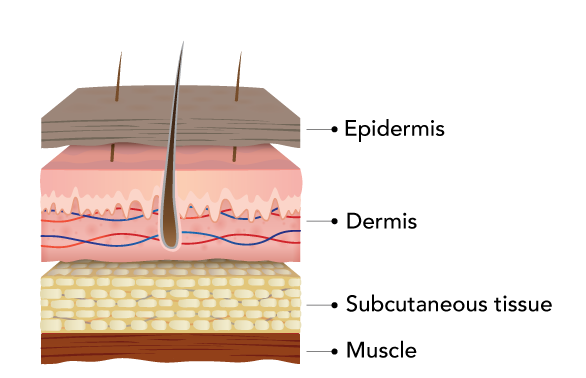
The skin is an important organ of the body. Its primary functions are to protect the body from environmental hazards and infection, eliminate waste in the form of sweat, help maintain normal body temperature, and tell the brain of environmental temperature changes.
Environmental Control
A rich supply of nerves in the skin keeps the brain aware of environmental changes. These nerves are sensitive to heat, cold, pain, and touch, and they transmit these sensations to the brain. The skin helps the body adjust to its environment and protects it from extreme temperatures. In cold temperatures, blood vessels constrict to reduce blood flow near the surface of the skin. This helps prevent loss of heat from the body core. The fatty layers under the skin insulate the body to keep in body heat. In hot temperatures, the blood vessels near the skin surface dilate (get larger), allowing more blood flow near the skin. This cools the body by moving heat from the core to the surface, where it either radiates from the body, or is used to evaporate perspiration, having a cooling effect.
Functions of the skin
- To protect the body from bacterial invasion
- To help control body temperature
- To retain body fluids
- To help eliminate waste products through perspiration
- To insulate the body
 |
 |